
Molding
Molding is a process that enables the production of parts with complex geometries that are difficult to achieve through machining or assembly. It allows for the integration of inserts, reinforcements, and other technical elements while minimizing raw material waste and ensuring consistent reproducibility.
At Industries 3R, we primarily produce molded parts using refractory concrete for its exceptional high-temperature resistance (such as aluminum smelter furnace plugs), polyurethane for its flexibility and abrasion resistance (like conveyor buckets used in mining), and silicone, which offers good heat resistance while maintaining flexibility (molded sealing gaskets).
Filter posts
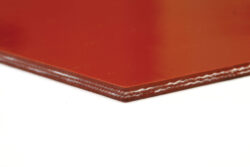
Laminated fabrics
Custom laminated fabrics Laminating fabrics using silicone allows the specific properties of each (mechanical strength, abrasion resistance, heat reflection, etc.) to be combined in order to obtain products that are better suited to certain specific needs.
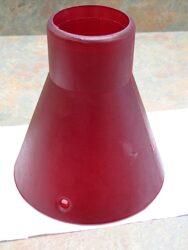
Polyurethane molding
Custom polyurethane molding Polyurethane molding allows for the manufacture of complex parts. Polyurethane stands out for its mechanical strength, particularly against abrasion, and offers a wide range of hardness levels.
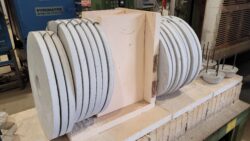
Refractory molding
Custom refractory molding Refractory concrete castings have very high temperature resistance. The casting process makes it possible to obtain shapes that are difficult to achieve through machining, while also offering the possibility of adding hardware elements, thus facilitating assembly and use.
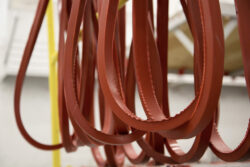
Silicone molding
Custom silicone molding Silicone molding allows for the production of complex parts that offer good flexibility and temperature resistance (± 500°F). Other materials can be incorporated to obtain specific characteristics.